Sub-heading

A blog for everything bookish

Saturday, 7 January 2012

How to make your book budget go further

If, like me, you have a bit of a book buying habit it’s always good to find ways to make your book budget stretch just that little bit further. With new fiction novels retailing at, on average, £6.99 per book it’s pretty easy to sink upwards of £25 per month on books, and with salaries being squeezed by pay freezes and increases in prices of necessities (food, fuel, energy) book buying can become something of a luxury. So I thought it might be useful to share a few ideas about how you can make your book budget go further. I hope you find them of some use.

1. Use the library
If you’ve got an idea of the book you want to read the library is a great way to enjoy that book without spending a penny. When you see a book that you think you might like to read, make your first port of call the local library and if they’ve got the book in stock you’re laughing. Simply make one little trip with your library card and voila! You have your book for free. Many libraries hold their library catalogue online so it’s becoming increasingly easy to search for the book you’ve got in mind, and some libraries even invite you to suggest books for them to add to their catalogue. If they get enough people wanting a book they’ll add it to their stock so it’s always worth asking if you can’t find it.

In UK now it’s fairly easy to join a library and there aren’t restrictions on you living in the area in order to use the library’s services. For me this is great as I work in Manchester but live in Lancashire, so I use both library services – if one hasn’t got the book I want the other might have so this increases the likelihood of accessing that must read book for free. And in a time when libraries are threatened with closure due to council budget cuts, increasing the use of the library makes it more secure so you’re doing a public service too.

And if you’re not sure what book you want to read the library is great too. It’s like a giant bookshop you can walk around and browse for as long as you like, but without you being tempted to buy something. Libraries also offer additional services like internet access and you can borrow music and DVDs too. It’s all good.

In terms of saving you money whilst giving you access to books the library is the best option. Just avoid the late return fines and you’re laughing.


2. Mine your friends
The great thing about having friends is being able to borrow their books. Okay, well maybe that’s not the greatest thing about having friends but it is an excellent extra benefit particularly if you share a love of books. Okay, your friends might not necessarily read the same types of books that you read, but you’d be surprised what people have in their libraries and trying something new is always good. So if in doubt, ask. I love lending books to my friends (providing they return them, of course).

3. Swap
Swapping is something you can do for free with your friends (see 2. above) or there are now websites which provide a book swapping service. It’s not a free process (although the websites themselves are generally free) but the cost of your book is usually limited to the cost of postage. This means that you can swap books fairly cheaply providing you can find someone on the site willing to swap with you.

The website I use is Read It Swap It which is a UK only swap site. Registration is free and the website is easy to use and intuitive. You simply log the books you are willing to swap into your ‘library’ (using the book’s ISBN number) and then you can browse the library and request swaps from other people. Setting up a wish list makes it easier for other people to see the kinds of books you’re looking for and once you’ve started swapping your fellow swappees will rate you on a star system out of 5 to let other read it swap it members know you’re a trustworthy swapper.

Another book swapping site I’ve heard about is Book Mooch. Book Mooch is an international site so has the advantage of carrying a larger selection of books, but works on a slightly different basis than Read it Swap it in that you earn ‘mooch points’ by sending your books to people and you use those points to ‘buy’ books from others. I haven’t used Book Mooch so I can’t say if it’s any good, but it is a well established site and looking at the reviews on the Which magazine site it sounds fairly good.

A word of advice when deciding which books you want to give away, the smaller/thinner/lighter the book is, the less it will cost in postage. If you’ve got a copy of War & Peace you don’t want in your collection, I wouldn’t recommend posting it for swapping as the postage cost alone will make it a much more expensive proposition.

4. Buy secondhand
If you have to resort to buying the book you want then it’s always worthwhile shopping around for a secondhand copy. Although the secondhand bookshop is a dying breed if you haven’t got a secondhand bookshop nearby it’s worth checking out the local charity shops as they will usually carry a stock of books. Oxfam is particularly good and in some places (for example Preston and Lancaster) they will have a dedicated Oxfam bookshop. I’ve found some real jewels in secondhand shops and prices are generally around £2.99 - £3.99 for most books.

Online offers additional options for secondhand books. Amazon marketplace enables the sale of secondhand books, as does www.abebooks.co.uk and www.alibris.com. It’s always worth checking out the marketplace options, but it’s worth checking the seller ratings on there if you want to avoid a bad experience. I’m a fan of Abe Books, and have used Amazon extensively for book buying (my desire for books overrides my philosophical doubts on that one!).

5. E-readers
I’ve put this one last as when weighing up the value of e-readers you need to really factor in the cost of buying the device in the first place. But if you have a device already, or you really, really want one or even if you’ve just got access to a PC then electronic versions of books can be a really cheap way of getting hold of the books you want.

If a book is outside copyright then the likelihood is, unless it’s something very obscure, there will be an electronic version available for free somewhere online. Project Gutenberg is one such organisation who have made electronic versions of classic books extensively available for free and e-books are available to anyone with a PC or any device which can read pdf files. Other websites such as www.online-literature.com may make texts available to read online.

A word to the wise about downloading novels which are translated, often the freely available version will not be the best translation available and if you want the best reading experience then e-books might not be the best solution for these types of novels, but anything written in your native language, whilst not pretty, is likely to be sound and it’s worth checking them out if you’re happy reading books on screen rather than paper. It’s not really for me, but I know many people who are very happy with their e-reading devices and the availability of free, classic books is a big benefit of ownership.


Still Missing by Beth Gutcheon

I think I've mentioned before my fondness for the small independent publishing house Persephone Books who produce these wonderful, very stylish, gret bound books mainly, though not exclusively, by female writers. I'm building myself a small collection and recently acquired a copy of Beth Gutcheon's Still Missing and just before Christmas I decided to give it a read.

Still Missing tells the story of Susan Selky, a university lecturer recently separated from her husband, Graham, and mother to little Alex Selky, a very confident nearly seven year old boy. One ordinary morning Alex sets out to walk the three blocks to school and never arrives. Susan discovers that he is missing only after he fails to come home from school; by then the trail is already cold.

With the assistance of her friend and the dogged assistance of Detective Menetti who is himself father to seven children, Susan searches for Alex. The novel closely follows Susan's trials and tribulations in the desperate search for her son.

The novel stays close to Susan's story, taking us through her terrible emotional journey. Her grief, her desperation. It exposes Susan's flaws and uncovers terrible secrets about her friends, her neighbours. No one is outside suspicion and the investigation causes irreparable breaks in some of Susan's closest relationships. You follow Susan's agony; the possibility of Alex's death, the seedy criminal world which is right outside her door which she hasn't seen, and never believed in. Her isolation, her guilt. The unforgiving nature of others, the quickness of those unconnected to the events (and even close friends) to judge. I won't tell you how the novel ends, that would truly spoil the story, but I will say that sitting on the train that day, as a parent of two small children myself, I shed a tear or two. Whether that's of grief or relief, well you'll have to read the book to find out.

Still Missing is an excellent novel, painful in its examination of the terrible truth of losing a child. Those who have followed the terrible story of Madeline McCann might uncover a nugget of truth in themselves by reading this book. The story is well written, the pace never waivers and neither does Gutcheon's eye for uncovering all the painful details. There is always enough unknown to keep you guessing, but just enough uncovered to keep you reading. A painful read for any parent, but a worthwhile one certainly.

Still Missing receives a tearful 8/10 Biis.

New Year, new reads

Happy New Year blog readers! I hope you had a nice book-rich Christmas and are looking forward to an exciting reading year in 2012. I've had a nice break, read some great books and am looking forward to my challenge for 2012.

So, what books did you get for Christmas? Mine were:
The Bees by Carol Anne Duffy
Runaway by Alice Munro
Selected Stories by Alice Munro
and
Within a Budding Grove by Marcel Proust (book 2 of In Search of Lost Time)

These were great acquisitions for me as they support my reading goals for 2012. This year I'm aiming to go short and long; I want to read more long fiction - books with a page count of 600+ - as I feel like I'm in the right sort of place to absorb those kinds of books, but I also want to explore the short story a bit more. I'm hoping that by examining shorts a little more I'll maybe be inspired to do more short story writing myself. And then maybe some longer stuff. Maybe.

For my 'long' reading list I think I'm going to try and do one per month. I've started already, being ambitious as I am, and leapt in with the behemoth The Tale of Genji by Murasaki Shibuki. Weighing in 1184 pages it's certainly a whopper, but already I'm finding it an excellent read. If I'm not in love with 'The Shining Genji' by the end of the novel, there's probably something wrong with me. Watch this space for more thoughts as I read through the book.

Other 'long' reads I'm looking at are:
A Winter's Tale - by Mark Helprin
2666 - by Robert Bolano
Anna Karenina - by Leo Tolstoy
Infinite Jest - by David Foster Wallace
In Search of Lost Time - by Marcel Proust
Ulysses - by James Joyce
The Old Curiosity Shop - by Charles Dickens
Middlemarch - by George Eliot
Kristin Lavransdatter - by Sigrid Undsert
The Magic Mountain - by Thomas Mann
Gravity's Rainbow - by Thomas Pynchon
Mickelsson's Ghost - by John Gardner

I have others (I've gone ever so slightly mad this past couple of weeks book buying) which may creep in if I find the time, though I'd like to save myself some whoppers for the rest of my life too. No good doing it all at once.

One major 'long' read which I'm also hoping to work my way through in stages this year is Don Quixote. For some reason, and I really don't get why, I have real trouble reading Don Quixote. It doesn't make a great deal of sense. I enjoy reading it, it's a good book. I love the characters. It's pretty easy to read and it's funny. But for some reason it's a real effort to pick it up and keep going. So my plan for this year is this: last year we bought a tent and we went camping quite a lot and we want to do the same this year, so I take Don Quixote as my 'camping book' and whenever we camp that's what I'll read. And that way I'll work my way through it. It's a plan anyway. I'll let you know how it goes.

For the short stories, wow there's a lot of scope! I hadn't realised there were so many excellent short story writers out there. So I have in mind that I'll read some Angela Carter (she's my favourite) but also some Cees Nooteboom, Alice Munro, Kate Chopin, Robert Coover. I've also ordered a compendium of stories called The Weird: A Compendium of Strange and Dark Stories which is going to take a little while to arrive but which looks really good. So I've got a lot to be going on with. Plus I've got other books too that I keep meaning to get around to: The Leopard by Leopardi being one of them, and I want to keep reading the Icelandic Sagas - I recently ordered Njal's Saga - and also reading up more about the Norse myths. So I've got my work cut out this year, but it's been fun already.

Here's to a 2012 filled with fun, inspiring and excellent reading.

Monday, 19 December 2011

The Magician's Assistant by Ann Patchett

Around December/January time is the perfect time to read this wintery novel by Ann Patchett; a novel which spans from the busy warmth of Los Angeles to the desolate midwinter cold of Nebraska bringing warmth of a different kind.

The Magician's Assistant follows Sabine's life after the death of her husband Parsifal, the Magician to whom Sabine was the assistant. But there's a twist in this tale from the beginning. That Parsifal was a homosexual Sabine was well aware. She had lived with him and his Vietnamese lover, Phan, in the time before Phan's death from AIDS. And she had nursed Parsifal through his own sickness until his sudden death from a ruptured aneurism, as his wife in name and spirit if not in body. That Sabine had loved Parsifal was a truth that had held her life together to that point. That Parsifal was not who she had believed he was was the dark secret that threatens to blow Sabine's life apart.

After Parsifal's death, Sabine discovers that he had a family still living in Nebraska. Having been told by Parsifal that he'd grown up in Connecticut and that his family had all been killed in an accident, the existence of this living family came as a complete surprise to her. This discover leads to the inevitable questions: why did he lie to her, and what had happened in the past to so totally separate him from his family.

Sabine becomes more confused when his mother and youngest sister, Bertie, visit. To her surprise, his family are lovely, his mother caring and tragically saddened by her son's death. They knew he was a homosexual, and yet they accept the strangeness of Sabine's relationship with him easily. After a brief visit to Los Angeles, they invite Sabine to visit Parsifal's old home in Nebraska to visit for Bertie's wedding which is due to take place in just a few week's time. To her surprise, Sabine agrees to go. A few days later she's on a plan to Nebraska, sending herself into the cold, darkness of Parsifal's past, searching for the truth.

I won't spoil the story by giving away too much of the detail. Suffice to say that in the wide open spaces of the American Midwest Sabine finds a claustrophobic community, she confront's Parsifal's darker past and finds love, and magic, where she least expects it.

The Magician's Assistant is a quietly beautiful novel. Suffused with emotion this is a story of love and loss and love again. Some of my favourite parts of this book involve the dreams in which Sabine reconnects with the lost Phan and, eventually, Parsifal. This is a novel which gives us hope that love can live on beyond the grave, that after the loss of a great love we can still find something more. That magic comes in many forms, and not all of it a trick. This was a book which was hard to put down, and easy to revisit.

The Magician's Assistant receives a magical 8 out of 10 Biis.

Moon Tiger by Penelope Lively

Claudia Hampton is dying. And she's writing the history of the world. With Claudia at the centre of it, of course. Claudia: intelligent, independent, irascible, argumentative, sometimes cruel, not massively likeable and yet very human, very vibrant, very determined, very herself, the cornerstone of this short, but rich novel. As she lies in the hospital, awaiting death from cancer, she digs deep into her memory, writing the history of her world starting with her primordial roots - competitive fossil hunting as a child with her brother Gordon - to the very present - her current condition, her impending death.

Claudia, writer of historical novels, breaks the rules of linear narrative and the story shifts where her memory takes her. Sometimes back to her early life, her times growing up with Gordon the brother that was her greatest ally and stiffest competitor. Her lover, and almost the love of her life. Then later, to her difficult relationship with her daughter Lisa, the gulf of misunderstanding between them, of failed expectations on both sides. Then to Egypt, the war, and Claudia's great love: Tom Southern. A brief, but intense relationship that ends when Southern is killed in action, an event from which Claudia never truly recovers.

Claudia is truly the centrepiece of this novel. She presents something of an unsympathetic character. Her certainty, her self-assurance, her razor-sharp intelligence and uncompromising nature rise to the fore in all of her relationships with the exception, perhaps, in her relationship with Tom which elicits the only softening in her otherwise diamond-hard character. And yet there is something likable in Claudia, admirable perhaps. Her uncompromising nature in the time period in which she lives is something groundbreaking. She is true to herself at the expense of (almost) everybody else, and yet her relationships are solid and true, they are lasting. Claudia brings her own brand of honesty to each relationship, and a sharp humour which lightens what could otherwise be a difficult character to like.

Then there are the moments in which the same event is viewed from the perspective of not just Claudia but other characters. Lively interjects the alternative view of this history of Claudia's world alongside Claudia's own perception of the event, giving the reader a very different perspective. This technique works most effectively when addressing the relationship between Claudia and her daughter Lisa, both of which are strong in their own rights yet neither of which quite recognises it in the other. A relationship submersed in disappointment. 

Claudia approaching the end begins to seek some kind of reconciliation. She apologises to her daughter, roughly, for being the kind of mother she was. She reads Tom Southern's journal, which had been sent to her by his sister after she'd figured out who the mysterious 'C' in the journal was and which had sat, dusty, on the shelf, unread for some time. Just before her death Claudia reflects on what could have been, on who she might have become had Tom lived, and how she has become something unrecognisable from the person he had loved.

Moon Tiger is an excellent novel, a deserving winner of the 1987 Booker Prize. Where Lively works most successfully is in drawing the story around such a vibrant, well imagined character. Claudia leaps off the page, uncompromising from the start, and whilst this may put some readers off (Claudia is not massively likeable, but in the end it is hard not to admire her) with some small perseverance it is well worth the effort. A richly imagined novel, vibrant as the colours of Egypt, as uncompromising as nature. I was left with only one doubt at the end of it: what is a Moon Tiger anyway? I still don't know. Any ideas would be much appreciated.

Moon Tiger gets a roaring 9 out of 10 Biis. Highly recommended.

Sunday, 11 December 2011

Great Gifts for Book Lovers

Christmas is fast approaching and if you're struggling to find something suitable for the book lover in your house, I'm here to offer some assistance. For me, Christmas isn't Christmas unless there's some sort of bookish gift included. You can forget your iPods, and Xbox games, your wines and spirits, you can even forget the socks, but if there's no book in the Christmas pile there's a sad Bii on Christmas day. So, without further ado here are my suggestions.

Book Tokens
As a child, the idea of a book token filled me with joy. That sturdy slip of paper which offered a world of choice was the one thing I always, always wanted...and never received. Am I bitter? Okay, maybe a little. The great thing about book tokens is that they offer the reader in the house a real choice of gift while acknowledging their bookish obsession. Plus there's no risk of buying the wrong book, something they already own or something they'd never read, which is almost as disappointing as receiving no books at all. How often have you gleefully unwrapped that book shaped parcel, hoping for Bleak House only to find the latest Dan Brown inside? Sigh. If you fear your choice of book with meet with a glum face, book tokens are the safe bet.

Most high street book retailers will offer gift vouchers of some sort, but my choice would always be National Book Tokens, which are accepted by most book retailers and give your book lover the ultimate choice. You can buy these online from a range of outlets or find out more from the source at: National Book Tokens 


Beautiful Books
If you are a bit more certain of your book lover's taste in reads, the next option would be to buy them a beautiful book. When I buy books, mainly I'm interested in the content and the cover art, etc, is not of that much interest to me. But when I receive a book as a gift, the more beautiful the better. I might not be willing to spend my own money on it, but as a receipient a beautiful book is guaranteed to make me happy. Fortunately, thanks to competition from the growing e-book industry, the publishers are fighting back with some truly spectacularly beautiful books with a reasonable price range. Here are my choices of true beauties this year.

The Folio Society
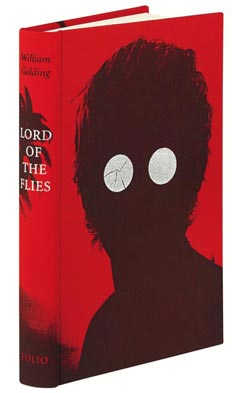
If you've got money to burn you can't go far wrong with a book from The Folio Society. These are books that a lot of thought and effort has gone into to make them stunningly beautiful. This copy of Lord of the Flies is truly head turning, and I'm quietly drooling over the beautiful Over Sea Under Stone (one of my favourite books) and this wonderfully illustrated Epic of Gilgamesh.

The Folio Society books can be found online at The Folio Society

Persephone Books
Another bespoke publishing house, Persephone Books publish high quality 'forgotten' classic books by women. I discovered Persephone by accident earlier this year and have become a firm fan, both because of the classy look of their books but also because of the quality of the fiction. The books have a very stylish and simple grey cover and each book has its own, unique endpaper with matching bookmark (and the book marks are also excellent quality - if only cardboard they're very sturdy and pretty). There's an interesting selection of books; my personal favourites (so far) have been Marghanita Laski's Little Boy Lost (it's a sad one) and Elizabeth Sanxay Holding's The Blank Wall. Most of the books cost between £10-£12 each plus postage and they're well worth it. My small collection looks beautiful on my bookcase, the binding is incredibly sturdy and the content excellent.
More information is available at Persephone Book's website


Virago Modern Classics
Ever since I discovered Angela Carter, I've been a fan of Virago books. Again, the focus here is on female writers, but with a wealth of great female writers available that doesn't in any way restrict the reader's choice. Along with many publishing houses, Virago have released a range of beautifully bound, textured hardback books with a price range of around £10-£15 each dependent on the retailer. Current books available are as follows:
The Enchanted April by Elizabeth von Armin
Good Behaviour by Molly Keane
The Dud Avocado by Elaine Dundy
The Tortiose and the Hare by Elizabeth Jenkins
My Cousin Rachel by Daphne du Maurier

Check out these beauties!


Penguin Classics & others
Penguin are another publisher than have branched out into a range of sexy hardbacks to tempt the book lover in you. Focusing on their 'classic' range, they've brought out a gorgeous selection of clothbound classics with something for pretty much everyone. Check out this stunning version of A Christmas Carol (surely the perfect Christmas gift?), or this equally stunning copy of The Odyssey. There are many books in the clothbound range including a number of works by Dickens and Jane Austen, there's Middlemarch by George Eliot, a flamingo crazed version of Alice's Adventures in Wonderland which I particularly like, Oscar Wilde's The Picture of Dorien Gray, Stoker's Dracula, The Hound of the Baskervilles amongst others. You can browse (or in fact buy, if you have the cash) the whole collection at Penguin's website here

If you fancy something a bit more modern, these Penguin deluxe classics are equally beautiful, if slightly less austere. Outside the classics range, penguin have also issued a number of contemporary 'greats' in jackets stylishly designed by tattoo artists, like the copy of Ali Smith's The Accidental below. The range also includes White Teeth by Zadie Smith, Notes on a Scandal by Zoe Heller, The Book of Dave by Will Self, High Fidelity by Nick Hornby and The Rotter's Club by Jonathon Coe. 


Kindle...or other ebook readers
Okay, I feel I ought to mention this though personally if someone bought me a Kindle I'd probably be deleting them from my friend list. As a book lover I am not a fan of the Kindle or, in fact, of any e-readers, but I concede they may have their uses. Whilst I can't see the point of carrying your entire library around with you, or why you would want to supplant your perfectly working paperback for something which requires power, I can't deny the power and appeal of the e-reader for many book lovers, and I can see that for students, for example, they could be a useful tool in obtaining cheaper academic books, storing their notes and it is a lot less to carry around. With a cheaper model out at £89, Amazon look likely to corner the e-reader market and depending on your book lover's persuasion it could be the perfect gift for Christmas. But for me, meh, I'd rather have the piece of coal to be honest.

So there's my thoughts for Christmas book gifts this year. I hope it's given you some great ideas for how to bring a smile to your book lover's face this year.

I hope that's given you all some food for thought. 


Thursday, 8 December 2011

The Ravishing of Lol Stein by Marguerite Duras


Earlier in the year I read my first novel by Marguerite Duras, a strange but compelling work called The Sailor from Gibraltar. I loved it. Duras has a classy style of writing, economical, sparse, open like a light, airy room. Having experienced her excellent writing previously, I had great expectations of The Ravishing of Lol Stein and in that respect this short novel doesn't disappoint. And yet, I can't say I loved it. It's a strange one, that's for sure.  

The story is told by Jack Hold, a doctor with an obsessive, destructive love for Lol and centres around a single event and the ongoing impact of that event on Lol and the people around her. As a young woman, Lol is jilted by her lover, Michael Richardson, at a ball held at a casino. With her is Tatiana Karl, her best friend. Together they watch until morning as Michael Richardson falls in love with another woman, Anne-Marie Stretter. Something changes in the hours of the night, something that transforms Lol completely. This event sets in place a kind of voyeuristic repetition cycle in which Lol observes the affair taking place between Tatiana Karl and Jack Hold and then in turn takes Tatiana’s place as Jack’s lover. So history repeats: Tatiana becomes the young Lol, Jack Hold becomes Michael Richardson, Lol becomes Anne-Marie Stretter. Lol’s illness requires a repetition, a continual repeating of events. The story culminates in Jack and Lol consummating their relationship in a trip to Town Beach, Lol reliving the places where her ‘fall’ occurred, replacing it with the Tatiana-Jack-Lol love triangle.

Or does it? From the beginning the circumstances and origins of Lol’s mental state are brought into question primarily through the ‘evidence’ of Tatiana Karl. As early as page 2 we are told ‘Tatiana does not believe that this fabled Town Beach ball was so overwhelmingly responsible for Lol Stein’s illness. No, Tatiana Karl traces the origins of that illness back further, further even than the beginning of their friendship. They were latent in Lol, but kept from emerging by the deep affection with which she had always been surrounded both at home and, later, at school. She says that in school – and she wasn’t the only person to think so – there was already something lacking in Lol, something which kept her from being, in Tatiana’s words, “there”.’ Yet only one further page later we learn ‘I no longer believe a word Tatiana says. I’m convinced of absolutely nothing.’ And then, in the next sentence, the whole story itself falls under question ‘Here then, in full, and all mixed together, both this false impression which Tatiana Karl tells about and what I have been able to imagine about that night at the Town Beach casino. Following which I shall relate my own story of Lol Stein.’

And that is what we get, Jack Hold’s ‘story’ of Lol Stein. The story of Lol’s fall, Lol’s history as told through the voice of Jack Hold who knows only what he has heard by rumour and may, in fact, be inventing the rest takes on the quality of a myth, a half-heard Chinese whisper. The entire novel takes on this quality, myth and rumour, a thin surface of fact laced with fiction. And the whole thing is overlaid with a strange kind of duality, a juxtaposition of the cold, unreachable nature of Lol against the heat of the summer and Jack’s obsessive desire for her. In the end it is impossible to decipher what is real and what is fiction (accepting of course that it is all fiction) with characters becoming interlaced and all, to a degree, unreachable, locked in their own perception of the events.

Duras writes beautifully, in crisp, descriptive sentences. There’s a clarity in her writing which is deceptive, particularly deceptive as it is what she doesn’t say that captivates. In the end, I felt there was just a little too much unsaid, it was all just a little too unreachable, I wasn’t sure I understood it. A strange, intriguing little book, hard to follow, strangely cold and at the same time almost oppressively sensuous. I’m still not sure how I feel about it, but sometimes that is the mark of the best kinds of books. One to read again.

The Ravishing of Lol Stein receives an uncertain 7 out of 10 Biis.