Sub-heading

A blog for everything bookish
Showing posts with label reflections on reading. Show all posts

Tuesday, 5 May 2015

Time to think

I’ve taken a few days off work, taking advantage of the bank holiday, and as always happens when I have a few days to spare with no real plans I find myself with time to think. Not straight away. It takes a few days, a few days of reading, of travelling around, perhaps, a few days of going to the shops or looking out of the window and watching the rain or the clouds passing by. Eventually those things run out of currency, and I’m left with nothing to hinder the thoughts I try so hard to escape from. This time I've decided to listen.

It is good to have time to think. The most creative times, I find, are those times when you have no option but to think, where thinking is something that springs upon you almost as an inevitability. Like in the shower, or on a long walk. These are often the times I find the keenest insight into my life and what I need to do with it. It is, perhaps, not surprising that so many writers are often keen walkers.

When I’m at work, when I’m in my normal routine, I don’t think. That doesn’t mean to say that I don’t think in my job, of course I do – I have to – but what I have to think about is everything other than myself and what I am doing. I can think about my work, I can think about my role and the meaning of my role, I can think, hard, to solve a problem. I think a lot, but that thinking is never reflection. On my way to and from work, I read. My free time at home is limited, and I can easily fill it with administration, with my kids, with housework or gardening or more reading. All this enables me to carry on through my life without thinking about what I’m doing. This engenders a kind of blindness, a lack of awareness and a failure to make real decisions. If I ever challenge myself, I spin out that old trope ‘I’ve made compromises,’ which isn’t quite true because ‘compromise’ implies a conscious choice whereas I think it is truer to say that I’ve simply taken the expedient route. This is nowhere else more apparent than in my reading obsession. If I think about the next book and the next book I want to read, then I don’t have to think about why I’m reading them or what it is that drives this need, this need which enables me to avoid confronting the course my life is taking. Reading, it appears, is a great source of distraction and I’m reminded of one of my less successful university interviews, many years ago, when my interviewer asked me why I read and I answered ‘escapism’. I didn’t get a place at that university, but I knew myself better then it seems.

Not surprisingly, then, my thinking has started with my relationship with reading, which I’ve blogged (briefly) about before. I am reading more than ever. I have a list of books I want to read which is ever growing, to the point that it is unachievable. I could buy a book every day, add them to my stack and get around to reading them, one day. Part of this is driven by my blog, but there’s something underlying it which I’ve been hiding from and which, to my surprise, has been revealed to me when I’ve thought about all the books which have particularly affected me. Those books were telling me something, and giving myself some time to think has made this clear to me.

Those books have been Tracks, A Book of Silence, A Woman in the Polar Night, Full Tilt. More recently, Nan Shepherd’s The Living Mountain – which I will blog about shortly – all of these books have shook me to my core. What is it about these books? All these women have taken a brave (or crazy) step. They have all done something which seems impossible, whether it is cycling across the world or walking across the Australian desert. All of these women have actively sought isolation and in the course of doing so have discovered who they were. This is something which I know absorbs me, as every idea I have for a novel centres around this theme. All of these women have sought an intensity of experience, they have risked their safety and suffered social approbation for what these have chosen to do. Yet their experiences have shaped them, they have enabled them to have a transcendent experience. What is my obsession with transcendence if not a sign to myself that the way I am living is simply not enough?

I am not unhappy with my life, in fact if I was unhappy it would be easier to make a change. What I see, instead, is that I am living an unchallenged life. My work is challenging, but not risky and it is easy to rise to that kind of challenge and pretend it is enough. It is not enough. I need to challenge myself, I need to confront myself and always remember that a fulfilled life is not necessarily an easy life. I let myself off the hook too often. I love reading, but there comes a point where you realise that the story you want to read isn’t out there, but is already inside you waiting to be released. I am ready, I think, to write my story. Actually it doesn’t matter if I’m ready, I simply must. I need to stop living this middle-of-the-road life. I have walked a path which has been opened up for me, instead of forging my own way and I have let my dreams fall along the wayside, victims of expedience and practicality.

My dream as a child was to be a writer, but along the way I have created the excuses which have permitted me not to pursue my dream. I have tinkered here and there but never taken it seriously. No one should give up their dreams so easily. I need to read less (crazy as that sounds), blog a little less and stop myself from filling those free hours with anything other than writing activity. I need to stop buying books, because the story I need to read is right here already. It will be a difficult read, and I won’t be able to read it and move on to the next story in a matter of days; but it will be the best story I will ever read and if I don’t nurture it from me now I’m condemning myself to die an old, regretful woman. I’m determining, right here, that this is not going to be the story of my life. 

Saturday, 3 January 2015

Reading Ambitions: 2015

I don’t plan on looking back at my reading year for 2014. It’s something that I used to do, it’s fun to do, but after my list making habit began to border on the edge of insanity I stopped keeping a book list entirely, and besides most of the books I’ve read have been reviewed on the blog already so I would prefer to encourage readers to dig around in the blog instead. Sanity thus protected, I thought it would be good, instead, to set out some reading goals for 2015.

Goals is the wrong word, of course. Goals and reading are not concepts that really fit together in my mind, though perhaps if I was a schoolteacher I might have a different perception on that. Perhaps, then, it is better to say some loose guidelines around the kind of reading I’d quite like to do in 2015. Or beyond. I’m not big on this whole living year by year concept either. Yet here I am writing about the next block of 364 days like a trooper. Did I say my sanity had been protected?

One of the great reading decisions I made in 2014, not that I’m reflecting on it of course, was to try to read books written by female writers. I didn’t set out to make this an iron-clad rule but in the end, barring half of Don DeLillo’s Underworld (which I quit because, unbelievably, I was finding it a bit boring/repetitive. This shocked me a great deal), I did end up reading only books written by women. This was surprising, as I thought I’d cave at some point and read, perhaps, the new David Mitchell, or perhaps something by Ballard or Nicholson Baker. Yet that didn’t happen. That wasn’t because I exercised an iron will to keep picking books written by women, neither was it because of dogged stubbornness or determination to hit a target. I didn’t have to keep convincing myself. It was easy. That’s because there are a huge number of amazing writers out there who also happen to have two X chromosomes and I was lucky to have encountered a bunch of brilliant bloggers who have been sharing their thoughts on great writers they’ve read who also happen to have two X chromosomes. The pool was rich with writing brilliance. Consequently I have read some amazing new (to me) contemporary writers (Evie Wyld, Hannah Kent, Elena Ferrante, Chimamanda Ngozi Adichie, Kathleen Jamie, Helen McDonald, Annie Dillard); reminded myself of some more familiar, great contemporary writers (Ali Smith, Helen Oyeyemi, Yoko Ogawa, Helen DeWitt); explored in more depth some classic (or should be classic) female greats (Virginia Woolf, Tove Jansson). Not that I’m reflecting on 2014 at all.

I don’t plan to exclusively read female writers, but I think after having experimented and explored for the last year I’ve discovered an appetite to experiment and explore some more. In the course of reading around different female writers I have, inevitably, encountered others that I’d like to read that I simply haven’t had time to. The following are writers I’d like to read (either for the first time, or in more depth) in the not-too-distant future:

Joan Didion – I have Katie Roiphe to thank for that one.
Edna O’Brien – because I bought the Country Girls trilogy from the secondhand bookshop and I’m itching to read them.
George Eliot – because she is greater than just Middlemarch and my collection of Eliot books is growing.
Rebecca Solnit – 2 books in my collection, none read yet. Yet I’ve encountered her writing elsewhere and she’s always impressed me as an intelligent, insightful woman.
Elena Ferrante – because the 3 books of the Neopolitan series are watching me…watching me I say!
Carol Shields – because she’s been recommended to me by too many people, there must be something in it.
Jane Gardam – for the same reason (also her Old Filth trilogy has just been reissued, quite beautifully)
I also want to go back to reading Japanese writers more regularly. I’ve committed to joining in with January in Japan, as promoted here in Tony Reading List  which will see me reading my first book by a male writer in a year, though Kawabata is surely an artist worth making the break for. I have a particular love for Japanese writers, there is something about Japanese fiction which really resonates with me. There is a well established catalogue of male Japanese writers that I’m already familiar with, so I’d like to explore the female writers in more depth. Writers who have made my ‘to read’ list so far include: Minae Mizumura (A True Novel, recommended from more than one source); Fumiko Enchi, because The Waiting Years was amazing; Yoko Ogawa, because everything I’ve read that she’s written has been amazing in quite different ways; and some writers that are completely new to me including Masako Togawa, Yoko Tawada, Morio Kito and Mitsuyo Kakuto. My aim is to try to read one per month, but I’ll see how that works out.  

I’d like to read more translated fiction in general. I’m not sure how I’ll fit that in, but I’ll find a way. Of course Ferrante will be in translation, as will the Japanese fiction (though I’m working on my Japanese reading skills…one day) so perhaps it will be easier than I think. There’s also one other commitment which I haven’t yet mentioned, which is my #TBR20 commitment over on Twitter. The idea behind this (if you’re not already familiar) is that it’s a commitment to read 20 books you already own, before buying (or borrowing) any more. I will have to break this to read the Kawabata (which I’ll loan from the library) but otherwise I’d like to stick to this commitment which may help me get through January with cash still in the bank. I haven’t made a list, I don’t want to be too prescriptive about which 20 books I read, and I have read 8 already (though I may have slightly cheated by including a children’s book in there) but there’s an opportunity to dig out some of my books in translation I haven’t yet got around to and kill two birds with one stone. And when I’ve finished, I will feel extremely virtuous. Then again, there is this amazing biography of Tove Jansson’s work which is tempting me and I do have some book tokens just burning to be used…

One thing I don’t want to do in 2015 is read more. My reading is lightweight compared to some (I’ve seen listings in excess of 150 books per year, whereas I generally average between 60 – 80, not that I’m counting (I’m really not)), but it is enough. I think if I try to read more I’m only going to absorb less. One of the things I’ve enjoyed about reading Woolf (which I haven’t quite finished) is how much richer the experience is when I’m forced to delve deeply, to take my time. I am enjoying re-reading favourite novels, or taking my time over difficult, but rewarding, books. I don’t know if this is an age thing, or just a realisation that I cannot read everything so I should make sure that what I do read is fulfilling to me. It is not quantity, but quality that matters. I’ve been lucky to have encountered a lot of fulfilling books recently, and I’ve no desire to give that up.

Aside from these (ambitious) goals, I’d like to continue reading non-fiction books. I’ve enjoyed the many I’ve read in the last 12 months, and I have a shelf-full of others that I really need to work my way around to.

Wishing you all another great year of reading pleasure. 

Wednesday, 24 September 2014

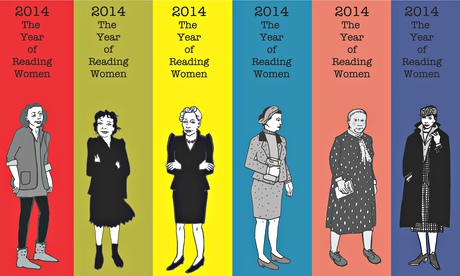
Thoughts on reading women for 2014


At the beginning of the year I decided to try out the Read Women 2014 initiative, started by Joanna Walsh, aiming to raise the profile of female writers. I won't go into any detailed rationale as to why I thought this was worthwhile here, though this article gives an interesting insight into why raising the profile of female writers is so necessary along with some useful source links. When I started I made a general commitment, thinking that I might insert the odd male writer here or there as the spirit moved me. I knew there was a David Mitchell novel coming out, for example. I enjoy J.M. Coetzee, Don DeLillo and Cees Nooteboom and there are many of their books I haven't yet read that I'd like to read. So I didn't plan to follow it rigidly, but rather tried to choose female writers and see what happened.

So what did happen? For a start, I haven't read any male writers. This hasn't been intentional. I've seen the Mitchell book come out with interest and bought at copy, and I'll read it when I get to it. What I found when I started exploring the works of female writers was what a plethora of amazing writers there are out there, vibrant, exciting, brilliant writers. If anyone had the idea that female writers just weren't as good or as innovative as their male counterparts, read works by women for a year and you'll soon discover differently. There are the known great writers: Virginia Woolf, George Eliot, the Brontes, Jane Austen, Doris Lessing. Then there are the lesser known great writers: Evie Wyld, Chimamanda Ngozi Adichie, Helen DeWitt, Elena Ferrante (read her), Deborah Levy, Jeanette Winterson, Hannah Kent, Helen Oyeyemi, Nadine Gordimer, Yoko Ogawa, Fumiko Enchi. I've discovered great writers from different cultures, from different time frames. I feel that I've barely got started, barely scratched the surface of the great writing that is out there.

What I've seen is that there's a disparity in the way writers are marketed. Maybe this is accidental, maybe not. It's a pattern. The latest book by Karl Ove Knausgaard has come out with a fanfare. There are t-shirts, posters, Karl Ove bingo cards. The latest Elena Ferrante came out with a whisper, you had to listen extremely hard to hear it (fortunately for me, I was listening). There are comparably brilliant writers, in fact I'd go as far as to say that Ferrante was better (blasphemy, I know). Why, then, no fanfare for Ferrante? When I go into my local Waterstones and look at the table display of great writers in translation, she isn't on it. She's on the shelf. I may, possibly, have then Ferrante-bombed the table display (she's on there now). I encourage others to do likewise. The latest Ali Smith came out with a whistle, David Mitchell with an orchestral symphony. Don't get me wrong, I love Mitchell. I celebrate his writing. He seems like a wonderful, personable man. I hold him no grudge, he deserves his success. But there's a disparity here, it isn't equal. Just look at the media frenzy over Murakami, yet Yoko Ogawa who is by far the better writer disappears quietly and barely a sliver of her works are translated. 

This saddens me. As a reader I want to be alerted to all the best writing, the most exciting books, regardless of the gender of the writer. I want to forget about gender and focus on the writing alone, but it seems that if I do that I will see and hear only those writers that the publishing houses want me to hear about, which in a large proportion seem to be men. When I receive the promotional e-mail from Guardian Books, the proportion of male to female writers they promote tends to be around 70/30. I ignore it now. I would miss entirely Elena Ferrante, whose work is vivid and passionate and painful and pure. I would miss Yoko Ogawa who brings a unique insight into the darker sides of human nature. I would miss Evie Wyld, whose work is deep and clever and near perfect. I would be a poorer reader for it. It is time for the publishing houses to look at themselves honestly, and make a change. They could start with their cover art philosophy for a start. I wonder how many men are put off reading a book written by a woman because the cover art makes it look like 'chick lit', when the descriptions suggest there's nothing in there for a man to be interested in. Surely sales will benefit if the book isn't gendered from the beginning?  

I haven't in any way regretted my (nearly) year of reading women. I haven't become less intelligent, I haven't become less interested in men. Why would I? A female perspective is as universal as a man's. Female experience is human experience. My regret, if anything, is that it seems necessary.  

Reading women has been a joyful experience. I have, now, in my sights a catalogue of amazing male writers and equally amazing female writers. I would like to extend that to encompass amazing Mexican writers, Saudi Arabian, Vietnamese, Korean, Kenyan, Peruvian, etc, etc. I want to experience the best writing out there. Only by reading diversely do I have a chance to achieve that. 

Friday, 30 May 2014

Reading Ambitions

Facing a week off work, the first thing I invariably do is give some considerable consideration to the books I will read whilst I am off. I am never quite sure why I do this, as my reading capacity when I am not working is always less than when I am. Something to do with spending an hour and forty-five minutes on the train every day, with little else to do than stare out of the window. Yet this activity gives me great pleasure. It is a great joy to sort through my books, considering and selecting, taking books from the shelves and putting them back again before settling on my final choices. Generally there are three: a couple of fiction books, maybe, and a non-fiction, perhaps some poetry. Rarely do I work my way through everything I take to read.

(It occurs to me that this is a pleasure that e-readers take away from the average bibliophile. Where is the joy in selecting if you have your whole library with you anyway at all times? Another nail in the coffin.)

Faced with a week off work I start thinking about my reading ambitions. I think it is right to call it ambition because my goals are lofty and I often aim higher than the extent of my reach. I want to read the entire works of Virginia Woolf, for example, I want to read until I know what it is to be Virginia Woolf, until her works are quotable and recallable to me. I want to read the entire works of George Eliot in the same way, and whilst I’m at it Jane Austen and the Brontës. I want to read the full catalogue of writers like A. M. Homes and Ruth Ozeki, Marilynne Robinson and Donna Tartt. I want to absorb myself in the works of Jeanette Winterson, every passion-filled full stop of them, and compare and contrast them to the scope and breadth of Elena Ferranti’s work. I want to read a book written by a woman from every place in the world, from places as far afield as Haiti and Mexico, Laos and Azerbaijan. I want to dig into female non-fiction, covering subjects from history to biology, from philosophy to people trafficking. I want to learn about far-flung islands and read about riding a bicycle from Ireland to India, being a farmer or opening a book shop on a narrowboat.

I want to read the entire works of J.M Coetzee and Don DeLillo, delve into the weird and highly focused world of Nicholson Baker. I want to explore the works of Kazuo Ishiguro and Zadie Smith. I want to read Dickens (but never got around to it) and Hardy and Balzac and Zola. I want to know, not just read but KNOW, the works of Yasunari Kawabata in all their beauty and sadness, their delicacy. I want to absorb the world’s mythologies until they become a part of me, the Greek myths, the Eddas and Sagas, Shanameh, the Mahabharata. Then there are new books. I get excited about the news that David Mitchell is releasing a new book this year (The Bone Clocks) and Marilynne Robinson (Lila). I see reviews of books like The Miniaturist and Elizabeth is Missing and feel, somehow, that I have to read them. Add them to my list.

There aren’t enough days in the week or hours in a day. Sometimes it is almost paralysing, this desire to consume, to absorb stories. I finish a book and move on to the next one, sometimes reading two or three at the same time (not literally but, rather, concurrently). I get frustrated at how slowly I read, how little time I have to absorb the ever-growing stockpile of stories. I get angry at how superficial my reading is, how little I can really take in. Deep appreciation of literature requires deep reading, but with so many books and, more importantly, so many I want to read how can it ever be possible to devote the time required to a real deep reading? And which books? Would I be better absorbing the literature of Tove Jansson than Donna Tartt? What about Tolstoy or Dostoevsky? How is it possible to decide which books, which writers, which stories are worthy of that level of devotion?


So I keep reading, and I dream of a day when I have a library consisting of exactly six books, their covers worn, their contents fading, but which have become my lifelong companions. The books I cannot do without. I dream of it, but I don’t see it happening. Instead I will be the woman crushed under the excessive weight of her library, the hundreds of books unread that can never be read that fall like a stone on her head taking every word with them, and it all will have been for nothing.