Sub-heading

A blog for everything bookish

Saturday, 4 October 2014

Strands: A Year of Discoveries on the Beach by Jean Sprackland

In Strands, Jean Sprackland explores a year on a beach, specifically Aindsale Sands on the North West coast of England. The ‘Strands’ of the title is the strandline, the line at which debris gathered and deposited by the sea is left. It is a clever title as Sprackland explores the idea of leavings in more than one way: both the articles left and encountered on the beach and her own leaving, as she moves to a new life in London.

The book is portioned into the various seasons starting with spring, and each section explores different items that Sprackland discovered on the beach. It’s an eclectic mix: from shipwrecks to Neolithic footprints, a teacup lost from Cunard Lines, driftwood and sea squirts. It makes for an interesting blend, and is a great example of how focusing on one small area, in this case a beach, can uncover an extraordinary array of subjects. Weaving among the facts, Sprackland draws out many literary references exposing herself as a literary geek (which is always nice) with snippets from her own poems, Twenty Thousand Leagues Under The Sea, Longfellow to name but a few.

Her alter-ego as award winning poet also shines through in the quality of her writing. There’s a lyricism to it which belies its otherwise plain language. That’s the skill of a poet: making something wonderful from ordinary words. Like here, in the chapter ‘Denatured’:

“But living in a place like this, you get used to living with sand. The wind drives it inland, where it scours the paint off window frames and parked cars. Upend the laundry basket, tip out all the socks and T-shirts onto the kitchen floor; what remains is sand. Empty the vacuum cleaner and it’s there, mixed with the fluff and dust which is the detritus of our lives. Even then I know there is plenty more of it, invisibly embedded in the fibres of the carpet in the house. When I clear the place out and move away, this is what will be left behind: a forgotten lightbulb burning itself out in the cupboard under the stairs, the odd coin or hairgrip wedged between floorboards; and sand.”

Strands is a well researched and interesting book, and it certainly made me want to go out and start scouring the beach for interesting finds. Sprackland shows a keen eye and an interest in everything, a willingness to search and find, a sense of care for the wildness and unpredictability of the sea. It is a book of discoveries, of ideas and innovation, a book about exploring and seeking the wonder that is available to us so easily, if only we choose to go and look. It is a book about commitment, how returning to the same place over and over remains rewarding, the value of intimacy and attention.

Strands is a beautiful read. If you’re a lover of nature books (as I am fast becoming) it is one worth looking out for. It doesn’t quite have the extraordinary power of Kathleen Jamie’s writing as seen in Findings which covers a similar theme (and which Sprackland references nicely), it has a softer voice and a less stark, more peopled, feel to it. Despite this, is it still a fascinating book full of interesting information coupled with Sprackland’s unique and valuable perspective.


Strands receives a shored-up 7 out of 10 Biis. 

Sunday, 28 September 2014

Reading Virginia Woolf: The Voyage Out

And so begins my foray into the works of Virginia Woolf with this, her first novel, The Voyage Out. The story begins with a sea voyage, bringing together one half of a core cast of characters. Helen and Ridley Ambrose, a couple who are travelling without their children to spend some time in South America where her husband will be writing a book. Willoughby Vinrace is the owner of the ship and also Helen Ambrose’s brother-in-law. Then there is Rachel Vinrace, a 24 year old women, niece to Helen and Ridley, who emerges from the fringes to become the key character in the book. Rachel is young, inexperienced and uneducated. After her mother died whilst Rachel was a child, she spent much of her life with her aunts (not Helen) who led a quiet and sheltered life and sheltered Rachel within it. Consequently Rachel struggles with her thoughts (‘if thinking it could be called’ as Woolf describes it), is passionate about music, and leads a thoroughly directionless life.

Helen Ambrose decides to take her niece under her wing and offers for her to stay with them at her brother’s house in (an unspecified location in) South America. Here they meet Terence Hewit and St. John Hirst, along with a brace of other characters that circle around the main. Rachel and Terence, over the course of time, fall in love and, following a boat trip down the river to visit a ‘native village’, become engaged. I won’t go into detail about how their story ends, but it is quite surprising.
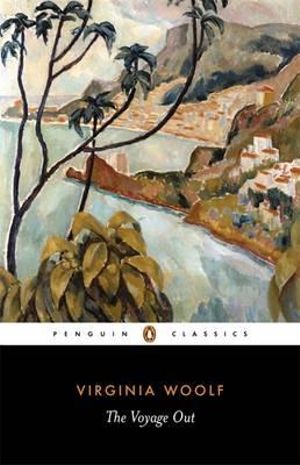
The plot of the novel, its narrative path, are relatively ordinary. The Voyage Out was Woolf’s first book, and she had not yet gained the confidence, I think, to allow her experimental instincts to the fore. Yet it is still an excellent novel, with much to commend it. Woolf, despite her inexperience, displays a highly keen eye for characterisation with the result that her core characters, and to a certain extent her secondary characters, are highly fleshed out. This makes them unique and memorable. Helen Ambrose is beautiful yet perversely minded, she loves to contradict. She is direct and honest, she does not say the things that are ‘appropriate’ but instead she says what she thinks. Yet she is warm and considerate, and she grows to love her niece. St. John Hirst is another excellently drawn character. He is extremely clever and hopelessly poor in social situations. He is equally honest, impatient, lacks care for people yet is drawn to Helen on account of her honesty. Rachel Vinrace is ungoverned and directionless, she does not understand her own feelings. There is a sense, here, of Woolf the girl drawn in Rachel whereas Woolf the woman, educated by sheer determination and exposure to an intelligent circle of friends, is represented in the form of Helen Ambrose.

That Woolf uses characters from her own life and experience seems clear. Having read Woolf’s diaries, understanding Woolf the woman and the people around her, this biographical element is clearer and I think that if someone was planning to embark on a reading of Woolf I would recommend that they read her diaries or her letters first to give them insight into the backdrop of her fiction. Though the story is entirely imaginary, the basis for her characters and their situations seems to be drawn from Woolf’s own life. There is also sense of Woolf experimenting in this book, using the book and the characters to draw out her ideas. Like here, as Terence, who is writing a novel, explains what he is trying to achieve:

“’I want to write a novel about Silence,’ he said; ‘the things people don’t say. But the difficulty is immense.’ He sighed. ‘However, you don’t care,’ he continued. He looked at her almost severely. ‘Nobody cares. All you read a novel for is to see what sort of person the writer is, and, if you know him, which of his friends he’s put in. As for the novel itself, the whole conception, the way one’s seen the thing, felt about it, made it stand in relation to other things, not one in a million cares for that. And yet I sometimes wonder whether there’s anything else in the world worth doing. These other people,’ he indicated the hotel, ‘are always wanting something they can’t get. But there’s an extraordinary satisfaction in writing, even attempting to write. What you said just now is true: one doesn’t want to be things; one wants merely to be allowed to see them.’”

Is this Terence talking, or Woolf? (I appreciate the irony of this extract given what I've just written about the biographical element of the novel) Sometimes the distinction isn’t too clear and there is a sense through the novel that Woolf is very thinly disguised beneath her wonderful prose. Similarly here:

“By these means Rachel reached that stage in thinking, if thinking it can be called, when the eyes are intent upon a ball or a knob and the lips cease to move. Her efforts to come to an understanding had only hurt her aunt’s feelings, and the conclusion must be that it is better not to try. To feel anything strongly was to create an abyss between oneself and other who feel strongly perhaps but differently. It was far better to play the piano and forget all the rest.”

Is this Rachel Vinrace or Woolf as a young woman, inexperienced and intelligent without the tools to express her intelligence. There are many such examples in the book, the ways in which Woolf explores the question of art vs public service and whether art should serve a purpose or serve merely as a mirror to reflect life in all its various incarnations as it is. I loved, too, the surprise appearance of the Dalloways (of Mrs Dalloway fame) in the early part of the novel. Woolf clearly had a strong conception of the Dalloways early on, which she later fleshed out in her famous short novel. Though they appear for only a short period, they are dynamic and well drawn and they make quite an impact on the youthful Rachel.

The Voyage Out is an excellent book. Though its narrative path and its story line are nothing remarkable, where Woolf brings her skill to it is in the sharp characterisation, her insight and wisdom, her explorative mind and a keen eye for description which she uses to destructive effect in her later novels. It is an entertaining book, tragic and beautifully constructed. It is not her best novel, but perhaps an easy introduction to Woolf’s works, and great fun to read. I enjoyed it immensely, and like all of Woolf’s works I think it is a novel worth returning to more than once.


The Voyage Out receives an introductory 8 out of 10 Biis. 

Wednesday, 24 September 2014

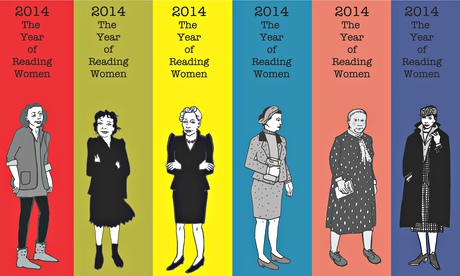
Thoughts on reading women for 2014


At the beginning of the year I decided to try out the Read Women 2014 initiative, started by Joanna Walsh, aiming to raise the profile of female writers. I won't go into any detailed rationale as to why I thought this was worthwhile here, though this article gives an interesting insight into why raising the profile of female writers is so necessary along with some useful source links. When I started I made a general commitment, thinking that I might insert the odd male writer here or there as the spirit moved me. I knew there was a David Mitchell novel coming out, for example. I enjoy J.M. Coetzee, Don DeLillo and Cees Nooteboom and there are many of their books I haven't yet read that I'd like to read. So I didn't plan to follow it rigidly, but rather tried to choose female writers and see what happened.

So what did happen? For a start, I haven't read any male writers. This hasn't been intentional. I've seen the Mitchell book come out with interest and bought at copy, and I'll read it when I get to it. What I found when I started exploring the works of female writers was what a plethora of amazing writers there are out there, vibrant, exciting, brilliant writers. If anyone had the idea that female writers just weren't as good or as innovative as their male counterparts, read works by women for a year and you'll soon discover differently. There are the known great writers: Virginia Woolf, George Eliot, the Brontes, Jane Austen, Doris Lessing. Then there are the lesser known great writers: Evie Wyld, Chimamanda Ngozi Adichie, Helen DeWitt, Elena Ferrante (read her), Deborah Levy, Jeanette Winterson, Hannah Kent, Helen Oyeyemi, Nadine Gordimer, Yoko Ogawa, Fumiko Enchi. I've discovered great writers from different cultures, from different time frames. I feel that I've barely got started, barely scratched the surface of the great writing that is out there.

What I've seen is that there's a disparity in the way writers are marketed. Maybe this is accidental, maybe not. It's a pattern. The latest book by Karl Ove Knausgaard has come out with a fanfare. There are t-shirts, posters, Karl Ove bingo cards. The latest Elena Ferrante came out with a whisper, you had to listen extremely hard to hear it (fortunately for me, I was listening). There are comparably brilliant writers, in fact I'd go as far as to say that Ferrante was better (blasphemy, I know). Why, then, no fanfare for Ferrante? When I go into my local Waterstones and look at the table display of great writers in translation, she isn't on it. She's on the shelf. I may, possibly, have then Ferrante-bombed the table display (she's on there now). I encourage others to do likewise. The latest Ali Smith came out with a whistle, David Mitchell with an orchestral symphony. Don't get me wrong, I love Mitchell. I celebrate his writing. He seems like a wonderful, personable man. I hold him no grudge, he deserves his success. But there's a disparity here, it isn't equal. Just look at the media frenzy over Murakami, yet Yoko Ogawa who is by far the better writer disappears quietly and barely a sliver of her works are translated. 

This saddens me. As a reader I want to be alerted to all the best writing, the most exciting books, regardless of the gender of the writer. I want to forget about gender and focus on the writing alone, but it seems that if I do that I will see and hear only those writers that the publishing houses want me to hear about, which in a large proportion seem to be men. When I receive the promotional e-mail from Guardian Books, the proportion of male to female writers they promote tends to be around 70/30. I ignore it now. I would miss entirely Elena Ferrante, whose work is vivid and passionate and painful and pure. I would miss Yoko Ogawa who brings a unique insight into the darker sides of human nature. I would miss Evie Wyld, whose work is deep and clever and near perfect. I would be a poorer reader for it. It is time for the publishing houses to look at themselves honestly, and make a change. They could start with their cover art philosophy for a start. I wonder how many men are put off reading a book written by a woman because the cover art makes it look like 'chick lit', when the descriptions suggest there's nothing in there for a man to be interested in. Surely sales will benefit if the book isn't gendered from the beginning?  

I haven't in any way regretted my (nearly) year of reading women. I haven't become less intelligent, I haven't become less interested in men. Why would I? A female perspective is as universal as a man's. Female experience is human experience. My regret, if anything, is that it seems necessary.  

Reading women has been a joyful experience. I have, now, in my sights a catalogue of amazing male writers and equally amazing female writers. I would like to extend that to encompass amazing Mexican writers, Saudi Arabian, Vietnamese, Korean, Kenyan, Peruvian, etc, etc. I want to experience the best writing out there. Only by reading diversely do I have a chance to achieve that. 

Tuesday, 23 September 2014

A Pillow Book for the 21st Century

Having been inspired by the wonderful Pillow Book of Sei Shōnagon, I have decided to start my own Pillow Book. It will not be a patch on the original, but I will observe the world in my own way and share my observations in homage to the great lady. Please check it out by following the link below. Look forward to seeing you there.

My Pillow Book

Sunday, 21 September 2014

Reading Virginia Woolf

I have dabbled with this idea for a while, and I've finally made a commitment. I'm going to read everything by Virginia Woolf. I love Virginia Woolf. She was an amazing person, an innovator. Her writing is not easy, but it is worthwhile. I have tinkered around the edges of Woolf for a while, but it's time to make that commitment. I will read all her works in chronological order. That's not because I lack imagination, but because I would like to see how she evolves as a writer. 

I am starting with The Voyage Out. Works I've read before I'll re-read. Watch this space for more.

Do I feel some trepidation? Certainly. I am committing to a reading plan which will take me, at least, to the end of the year to complete. It is almost inconceivable that I won't be distracted by some new, shiny thing in that time. I am easily distracted. Wish me luck, and great reading. I'll share my thoughts on her books, on Woolf as a person, as I go along. 

Saturday, 20 September 2014

Findings by Kathleen Jamie

Earlier this year I discovered a penchant for nature writing, and since then I have been exploring different writers, sticking with my commitment to read female writers (though Rings of Saturn is calling me from the shelf. Next year, next year). Something about the wonderful cover of Findings called out to me - perhaps it was the sense of space, the starkness and freedom suggested by the lone peregrine banking over the hills. I’m immensely pleased it did.

Findings is something of a find (ha ha, do you get it?!); if you love books which are factual, observant, perceptive and beautifully written there is much to offer in this beautifully formed book. As a starting point Sort Of Books, the publishing house, have produced a beautiful book (I may mention here, as it’s worth mentioning, that Sort of Books also print some equally beautiful books by Tove Jansson). It is robust, it has a weightiness to it. The cover is striking yet hardy, which seems to encourage the idea of taking the book out there to read in the wilderness, the green mound of the world at your feet. Frankly the book is a work of art in itself, a pleasure to hold and a credit to any book shelf.

But I’ll stop gushing (but it is lovely) for a moment to tell you about the content, which is equally beautiful. In Findings, Kathleen Jamie casts a fresh eye over the seemingly ordinary, creating a book which is both a travel book and a nature book. Her prose is instantly arresting, as evidenced here in the opening chapter ‘Darkness and Light’:

“Mid-December, the still point of the turning year. It was eight in the morning and Venus was hanging like a wrecker’s light above the Black Craig. The hill itself – seen from our kitchen window – was still in silhouette, though the sky was lightening into a pale yellow-grey. It was a weakling light, stealing into the world like a thief through a window someone forgot to close.”

There is a lyricism to this prose, it seems to relax the reader into it; the literary equivalent of watching waves break gently on the shore. In the course of this first chapter, Jamie describes a visit to a Neolithic chambered cairn called Maes Howe on the day of the solstice, the only time when the light shines along the interior passageway and onto the tomb’s back wall. Whether Jamie was able to view this successfully is something I’ll leave for you to find out when you read the book yourself, but she describes the experience with great intelligence and humanity, focusing as much on the two men she finds surveying the tomb as on the history and mystery surrounding the tomb and its occupants.

Don’t be misled into thinking, however, that this book focuses solely on the natural world, though I think it’s fair to say that the focus is on observing the natural, with Jamie bringing a unique perspective and her beautiful prose to bear in drawing out things we might otherwise never have noticed. She discusses the peregrines and ospreys as they cling to their dwindling existence against the ever-present threat of human encroachment; she explores the Royal College of Surgeon’s, Surgeon’s Hall, with its macabre exhibits; she discusses her husband’s dice with death through fever, a memory prompted by encountering a spider’s web one morning. By far my favourite chapter was the title of the text, Findings, in which Jamie explores an uninhabited Scottish island and describes the things she finds there including a crashed aeroplane, multitudes of plastic, driftwood and the decaying body of a whale, which she describes here:

“It must have been on the shore a month or two, the whale, because it was half blanketed in the orange coloured weed. Half sinking or half emerging out of a bed of sand and weed. The body was rolled in the motion of a wave, and there was one dark orifice, like a cave, in its mouldering head, perhaps an eye socket. It was the heaviest creature I have ever seen, dead and out of the water’s buoyancy, a massive failure. I thought about touching it with just one finger, furtively, the way a gull pecks, and I wish now I had, because I’ve never touched a whale and probably won’t get the chance again.”

In many ways this typifies the character of the book. In one sense the subject matter is grim, macabre, and yet Jamie brings a kind of celebration to it. She asks us to view death with different eyes, to consider that which is cast off – a deformed limb, a gannet’s skull – for its potential. She does all this whilst bringing both an honesty and a freshness to every subject she encounters be it a decaying whale, a peregrine falcon, a stone circle or the Edinburgh skyline. In each encounter she marries the intellectual with the personal, sharing her own connection with the item or place alongside its own history. There is something very soothing about the way in which she conveys everything, she has a marvellous way with words and a unique ability to find the beauty and meaning in everything.

Findings is a wonderful book to read. It is sharp yet contemplative, a meditation in book form. One to own and one to read regularly.


Findings receives an inspirational 9 out of 10 Biis.    

Sunday, 14 September 2014

The Lover by Marguerite Duras (translator Barbara Bray)

The Lover is a fictionalised biographical work by Duras, recounting her first love affair with an older Chinese man during her childhood in Indochina. Duras was fifteen when the affair began, an affair deemed illicit due to her age and their difference in race. The novel captures the period during which the affair ran its course, though in truth its range is broader than that, capturing the period as a kind of distillation of the course of Duras’s life. It is apparent the affair had a significant impact on her, and the novel gives a very frank assessment of that period and its consequences.

Duras writes with sparse economy and a keen, insightful wisdom. There is a great deal unsaid in the book, and yet a complete picture is given of the relationship, its flaws, Duras as a naïve yet calculating young lover. It is quite a disturbing read, not because of the nature of the relationship, their age difference and racial differences, but the ways in which the young Duras takes advantage of her lover, treats him badly and, to a degree, herself, the level of hatred and dismissal from both herself and her family against the backdrop of his reverence and gentleness. The lover is from a rich family, he cannot marry Duras both because she will not allow it and because his father will not either. Duras, in contrast, lives in poverty. Her father has died and her mother has lost what money they had on a bad land deal, her elder brother is a drain (she refers to him, often, as the ‘murderer’ due to her perception of his guilt in the younger of the two brothers’ death which occurs after the time frame in which the story is set) and the younger brother seems unfit for study though it is apparent Duras loves him greatly. That at fifteen Duras sets out, it appears, to find herself a rich lover in order to supplement their income, perhaps, is not surprising and though the family openly disapprove, on another level her behaviour is sanctioned. As she explains:

“The only thing left is this girl, she’s growing up, perhaps one day she find a way to bring in some money. That’s why the mother lets the girl go out dressed like a child prostitute. And that’s why the child already knows how to divert the interest people take in her to the interest she takes in money. That makes her mother smile.”

There’s a strange directness and indirectness to this novel. On the one hand much is left out, a great deal is unsaid. On the other hand, there is a brutal kind of honesty, Duras does not shirk from laying responsibility for her behaviour at her own door. She admits how terribly she treated her lover, how she used him, how mercenary she was, how he knew it, how her family knew it, how the affair had no future and no end, how she did not love him (or thought she didn’t) how it marked and damaged them both, in Duras’s case for life it seems. Is it something she is sorry for? Yes, the novel professes her sorrow, not for the relationship but perhaps for the way it was conducted and the way that it ended. As she says:

“And I’ll always have regrets for everything I do, everything I’ve gained, everything I’ve lost, good and bad, the bus, the bus-driver I used to laugh with, the old woman chewing betel in the back seats, the children on the luggage racks, the family in Sadec, the awfulness of the family in Sadec, its inspired silence.”

All through the novel, Duras’s perceptiveness, her wisdom, shines through. It is a piece of fiction / non-fiction in which each paragraph provides its own weight, could be read, interpreted, analysed in great depth. It is a slight book, yet one which benefits from more than one reading due to its density, a density which is not apparent due to the sparse simplicity of Duras’s prose. In fact it is very easy to read the book lightly, to dismiss it as a simple love story. It is so much more than that. It is, I think, an explanation of Duras’s life in which she addresses her flaws, her difficulties, why and how she drank, why and how she turned to writing, how she manipulated herself and others, her independence, her single-mindedness, the terrible way in which she shaped her life story. Except there is no life story, as she says here:

“The story of my life doesn’t exist. Does not exist. There’s never any centre to it. No path, no line. There are great spaces where you pretend there used to be someone, but it’s not true, there was no one.

It is a melancholy book, filled with regret. At the same time it is defiant. Duras does not express any desire to have lived any other way, she seeks only to explore the fundamental truth of her existence; a truth she has buried in a childhood half forgotten, brought to life again in this short, but impactful novel. Her life encapsulated in a single image, the image of herself at fifteen crossing the Mekong river, her lover-to-be on the other side.


The Lover receives a confused but impressed 8 out of 10 Bii’s.